
Leadership Retreats in India: The Complete 2026 Guide
A structured off-site for your senior team — a defined business purpose, professional facilitation, and the right environment. Everything you need to plan a leadership retreat in India in 2026: what it is, how to structure it, where to go, and what actually makes it work.
What is a leadership retreat?
A structured, off-site program for senior leaders — C-suite, VPs, directors, or high-potential managers — that takes the team out of its regular environment to think more clearly, connect more deeply, and align on what matters most. It is different from a team outing or team-building day: the focus is leadership, not entertainment.
Most retreats fail not because of bad intentions, but because of poor planning, weak facilitation, and the wrong venue. Three elements separate the ones that work:
A clear business purpose
Strategy alignment, culture reset, succession planning, capability building — or a deliberate combination. Purpose first, everything else designed backward from it.
Structured facilitation
Sessions designed to produce real outputs, not just conversations. Without it, senior rooms drift to the loudest voice and the safest topics.
The right environment
A location and setting that supports focus, reflection and connection. The room shapes the thinking more than most planners admit.
Without all three, a retreat becomes an expensive off-site with no lasting impact.
Types of leadership retreats
Not all retreats are the same — the type depends on what your team needs most right now.
Strategy Retreats
Focused on business direction: where the company is, where it is going in the next 12–24 months, and how the leadership team aligns on the path. Best timed at the start of a financial year or an inflection point — a new market, a merger, a pivot, or rapid growth that has outpaced the org structure.
- Who attends
- CEO + CFO + business unit heads · 10–25 people
- Duration
- 2–3 days
- Best timed
- New FY, market entry, merger, pivot
Alignment Retreats
For teams pulling in different directions — post-merger, post-restructure, or after leadership changes. The format surfaces the disagreements that get politely buried in weekly meetings and resolves them face to face, with a facilitator who keeps the conversation honest and moving.
- Who attends
- Senior leadership teams · 15–40 people
- Duration
- 2 days
- Best timed
- After reorgs, mergers, leadership change
Capability-Building Retreats
Development-focused programs — coaching skills, strategic thinking, leading change — built around experiential formats and individual development plans rather than business decisions. Often part of a longer HiPo or succession journey, with the retreat as its accelerant.
- Who attends
- HiPo & leadership cohorts · 15–30 people
- Duration
- 2–4 days
- Best timed
- Within succession & HiPo journeys
Wellness & Renewal Retreats
For leadership teams running on fumes — reflection, nature, movement and unstructured time, deliberately protected from agenda creep. Recovery is the outcome, not the perk; the format works precisely because nothing "productive" is allowed to colonise it.
- Who attends
- Burnt-out senior teams · 10–30 people
- Duration
- 2–3 days
- Best timed
- Post-crunch quarters, after major launches
Celebration Retreats
Marking a milestone — an exit, a record year, a hard-won turnaround — with recognition woven into light strategy work. Gratitude done properly is a retention tool: the leaders who carried the year should feel it before the next one starts.
- Who attends
- Whole leadership groups · any size
- Duration
- 1–2 days
- Best timed
- After exits, record years, turnarounds
Leadership retreat vs offsite vs outbound training
Three terms used interchangeably that mean different things. A retreat is the broadest; an offsite is business-focused; outbound training is physical and experiential. Many Trebound programs blend all three.
| Leadership Retreat | Leadership Offsite | Outbound Training | |
|---|---|---|---|
| Primary focus | Reflection, alignment, development | Business planning, decision-making | Experiential skill-building |
| Duration | 2–4 days | 1–2 days | Half-day to 5 days |
| Facilitator needed? | Yes — always | Usually | Yes — specialised |
| Physical activity | Optional, moderate | Rare | Central |
| Output | Culture, clarity, growth | Plans, decisions, priorities | Skills, team dynamics |
| Venue type | Resort, nature property | Hotel, conference facility | Outdoor / adventure venue |
See also: Leadership Retreat vs Leadership Offsite · Outbound Training
Who should attend a leadership retreat?
Retreats are highly customisable by seniority and size of the group.

C-Suite Retreats
CEO, CFO, CHRO, CMO, CTO and direct reports. Strategy, culture and alignment at the top — intimate format, high-stakes conversations, strong facilitation required.

Senior Leadership Team
Beyond the C-suite: BU heads, VPs and senior directors. Good for cascading strategy and building cross-functional relationships.

High-Potential (HiPo) Cohorts
Succession candidates on a longer development journey — the retreat accelerates readiness rather than deciding strategy.

New Leader Cohorts
First-time managers and newly promoted directors needing structured transition support — often paired with a broader training program.
Ideal duration: how long should a leadership retreat be?
| Duration | Best for | What you can cover |
|---|---|---|
| 1 day | Annual kickoffs, celebration events | Single theme — alignment, values, one key priority |
| 1.5 days | Quick alignment sessions, HiPo programs | 2–3 themes, light outdoor activity, team dinner |
| 2 days ★ the sweet spot | Most senior leadership retreats | Strategy + development + team connection |
| 3 days | Deep strategy work, capability building | Full program with outbound, coaching, planning |
| 4–5 days | Intensive leadership programs | Multi-module development with individual coaching |
For most companies doing their first leadership retreat, 2 days is the sweet spot — long enough to go deep, short enough to keep attendance high and logistics manageable.
Choosing a leadership retreat destination in India
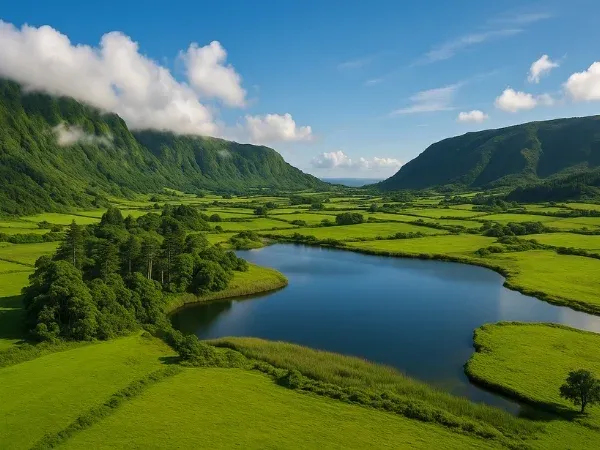
The environment shapes the mindset — a cramped city conference room does not produce the thinking a jungle resort in Coorg or a beach property in Goa does. Four selection criteria:
Proximity to base city
Destinations within 3–5 hours of travel (road or flight) maximise time on the retreat itself — long travel eats the program.
Quality of accommodation
Senior leaders expect a standard: 4-star and above is the minimum for executive retreats, with good meeting facilities, reliable Wi-Fi and comfortable rooms.
Nature access
Green space, fresh air and natural settings have a measurable impact on creativity and stress levels — nature-set retreats consistently score higher on participant satisfaction.
Facilitator friendliness
Some venues are built for events; others are not. You need proper AV, breakout spaces, and a venue team that understands program logistics.
Top leadership retreat destinations in India
Luxury properties across handpicked environments.




Leadership retreat agenda
Create the container
Set the context, establish norms, and break the daily pattern. Many facilitators use a simple check-in ritual: each participant shares one word describing how they're arriving, and one thing they want from the retreat. It sounds simple. It works.
Do the real work
The sessions where the team does the thinking and conversations that justify the investment. Keep sessions to 60–90 minutes and build in breaks — the brain stops working well after 90 minutes of intense focus.
Build the relationship
The evening is not optional programming. A shared dinner, campfire, cultural experience or guided walk creates the informal connection that accelerates trust. Some of the most important conversations of a retreat happen here — not in the morning plenary.
Make it stick
Individual commitments (each leader states one specific thing they'll do differently), accountability pairs, and an appreciation ritual. This determines whether the retreat produces lasting change or is forgotten by week 3.
Deep work, connection and downtime — balanced
Day 1
Day 2
Activities for leadership teams: what actually works
What to avoid: quiz nights and generic team games, lecture-heavy sessions where senior leaders are talked at, overly packed agendas with no white space, and activities without debriefs.
Strategic simulations
Business scenarios requiring decisions under realistic pressure. Works well with analytical leaders skeptical of softer activities.
Wilderness survival challenges
Multi-hour outdoor challenges create a levelling effect — the CEO and the VP are equally uncertain, which generates authentic connection.
Leadership story-telling
Each leader shares a career moment that shaped how they lead. One of the highest-trust activities available. The most senior person must go first.
Outbound leadership challenges
Rope courses, adventure trails, river crossings. Physical engagement breaks cognitive rigidity — always follow with a structured facilitated debrief.
Measuring ROI: does a leadership retreat actually work?
The most rigorous approach: define success metrics before the retreat, not after. Ask — "What would have to be true in 90 days for this retreat to have been worth it?" Write it down. Revisit it.
Immediate outputs
- Can all participants articulate the top 3 priorities?
- Were decisions made that had been stuck?
- How many personal commitments were made — and are they being tracked?
- Did leaders feel the time was genuinely well-spent?
Lagging outcomes
- Team cohesion scores via pulse surveys
- Cross-functional collaboration quality
- Senior leader retention — lack of investment often surfaces in exit interviews
- Business performance against priorities set at the retreat
How Trebound designs leadership retreats
Designed and delivered for companies across India — from high-growth startups to enterprise teams in BFSI, SaaS, manufacturing and healthcare.
1 · Outcome first, experience second
Every design starts with the business or team outcome you need. Venue, activities and facilitation style are designed backward from it. No templates.
2 · Senior-leader grade facilitation
Facilitators who have worked at CXO level — able to hold their own in a room of senior leaders and navigate difficult conversations without losing the thread.
3 · End-to-end ownership
Venue sourcing, logistics, facilitation, activity design, on-site coordination and post-retreat follow-up. Your HR team shouldn't manage ten vendors for one retreat.
Brief to retreat, week by week
Group sizes 10 to 200 · minimum lead time 3–8 weeks.
Discovery call
Objectives, group profile, constraints — the conversation the whole design hangs on.
Proposal
2–3 destination and program options, costed, with trade-off notes.
Site visit + finalisation
Site visit for groups of 25+, itinerary locked, facilitators assigned.
Preparation
Participant communication, logistics, material preparation — the invisible work.
On-site delivery
Full on-site support with a dedicated coordinator; your team participates, ours runs it.
Follow-through
Summary document + 30-day follow-up recommendations, so week 3 doesn't erase day 2.
Leadership retreats, answered
A leadership retreat is a structured, outcome-driven off-site program for senior leaders — a defined business purpose, professional facilitation, and a program designed to produce real change in strategy, alignment or capability. A team outing is primarily social and recreational. Most companies doing a retreat for the first time are upgrading from an outing format, and the shift in quality is significant.
10–25 for C-suite and strategy formats, where every voice must fit in one conversation; 20–40 for senior leadership teams; up to 50 for cohort programs run in parallel breakouts. Beyond 50, it stops being a retreat and becomes a conference — a different design with different economics.
3–8 weeks minimum: 3–4 weeks for smaller groups at drive-to destinations, 6–8 weeks for 25+ participants, fly-in destinations, or peak season (October–February), when premium properties and senior facilitators book out fastest.
Everything — venue sourcing and negotiation, travel logistics, program design, facilitation, on-site coordination and post-retreat follow-up, on one contract and one invoice. Facilitation-only engagements are possible if your team owns logistics.
BFSI, SaaS and technology, manufacturing, healthcare and pharma, and high-growth startups — the format adapts more to the team’s stage and dynamics than to its industry.
October to February for most destinations — Goa, Coorg, Lonavala and Rajasthan are all at their best. March–June favours hill destinations (Himalayas, Ooty, Mahabaleshwar). Monsoon retreats work at properties designed for them — Kerala in the rain is a feature, not a bug, for reflection formats.
External, in almost every case that matters. An internal facilitator has a stake in the outcomes, a position in the hierarchy, and history with everyone in the room — three things that suppress honest conversation. Internal works only for light alignment sessions with low-stakes agendas.
Define the 90-day success metrics before booking — stuck decisions to unblock, priorities to align, retention risks to address — and cost the alternative honestly: misaligned leadership compounds daily, and one regretted senior exit costs more than a decade of retreats. Then measure against the metrics you wrote down.
Yes — outbound elements (rope courses, survival challenges, adventure trails) are designed into the agenda with facilitated debriefs tied to the retreat's themes, not bolted on as entertainment. See our outbound training formats for the full repertoire.
Every physical element has a parallel non-physical role — strategist, observer, debrief lead — so nobody is benched from the learning. Formats are chosen against the group’s real mobility profile, disclosed in the discovery call, not discovered on a hillside.
A summary document capturing decisions, commitments and owners within a week, plus 30-day follow-up recommendations. For programs with accountability pairs, we provide the check-in structure — whether commitments survive is then a leadership behaviour, and we say so upfront.
Yes — a common pattern is a leadership retreat running a day ahead of an all-hands offsite or annual day at the same venue: leaders align first, then the wider event cascades it. One venue contract, two program designs.
Yes — Dubai, Singapore, Sri Lanka, Thailand, Bali and Nepal are the most-booked, with local DMC partners for on-ground delivery. International adds 2–4 weeks of lead time for visas and group airfare.
10 participants for facilitated retreat formats. Below that, a retreat becomes executive coaching in a nice location — a legitimate format, but a different one, and we'll say so rather than sell you the wrong thing.
Related resources
Leadership Retreat vs Leadership Offsite
The two formats compared in depth — when each is the right buy.
Leadership Training Programs
Workshops, offsites and cohort journeys with measured follow-through.
Outbound Training
The experiential formats retreats borrow — brief, experience, debrief, transfer.
All Retreat Destinations
65+ destinations compared by objective, season and travel time.
Ready to plan your leadership retreat?
A custom proposal in 24 hours — venue sourcing to expert facilitation, on one contract.